
Building owners and facility managers are under increasing pressure to reduce energy consumption, improve building performance and comply with evolving sustainability requirements.
Across Europe, regulations and market expectations are shifting the focus from simply monitoring buildings to actively optimizing their performance. As a result, smart HVAC control is becoming a critical component of modern building operation.
The next step in building automation
Many commercial buildings already use Building Management Systems (BMS) to monitor heating, cooling and ventilation systems. While monitoring provides valuable insights, it does not automatically improve energy performance.
A truly smart building goes beyond collecting data. It continuously analyzes operational conditions and automatically adjusts building systems to improve efficiency, comfort and overall performance.
This transition from monitoring to active optimization is one of the key developments within modern building automation.
Why building performance matters more than ever
Traditionally, energy performance was largely assessed during the design and construction phase of a building. Today, the focus is shifting towards actual operational performance.
Building owners increasingly need to demonstrate that their buildings:
- Operate efficiently during daily use
- Minimize unnecessary energy consumption
- Provide healthy indoor environments
- Continuously optimize system performance
- Support sustainability objectives
As a result, HVAC systems play a more important role than ever in achieving energy targets.
Monitoring alone is not enough
Many buildings already collect large amounts of data through:
- Building Management Systems (BMS)
- Energy Management Systems (EMS)
- Smart meters
- Sensors and monitoring platforms
However, data alone does not reduce energy consumption. To achieve meaningful improvements, HVAC systems must be able to respond automatically to changing building conditions.
Smart HVAC control enables installations to:
- Adjust flow rates dynamically
- Optimize heating and cooling demand
- Maintain stable indoor temperatures
- Reduce energy waste
- Improve overall system efficiency
The role of intelligent HVAC systems
Modern HVAC systems are becoming increasingly intelligent. Rather than operating at fixed settings, they continuously adapt to:
- Occupancy levels
- Weather conditions
- Room demand
- Operating schedules
- Changing building loads
This allows building operators to improve comfort while reducing operating costs and energy consumption. Smart HVAC control is therefore not simply a technology upgrade. It is a strategic approach to achieving better building performance.
Dynamic flow control as an enabler of smart buildings
One of the technologies supporting smart HVAC strategies is dynamic flow control. By ensuring that heating and cooling systems receive the correct water flow under all operating conditions, dynamic flow control helps buildings operate more efficiently and predictably.
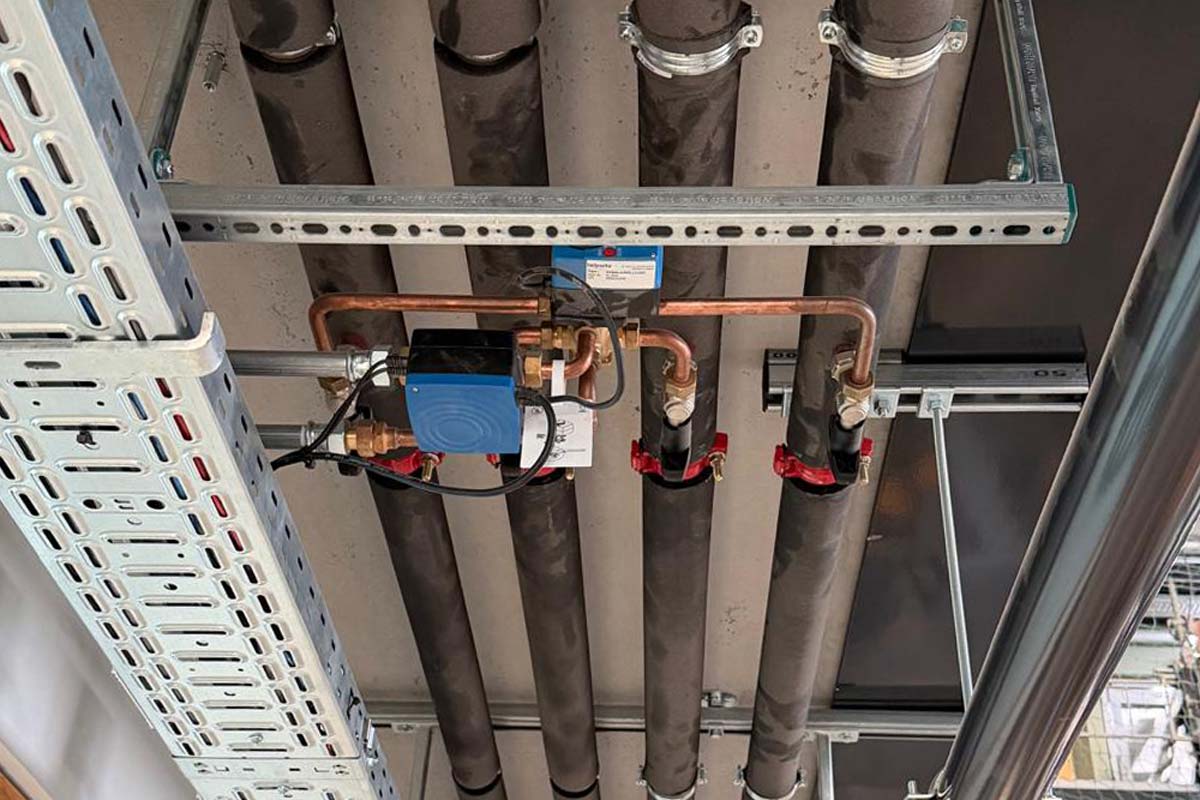
BELPARTS supports this approach through its dynamx™ flow control valves, which are designed to improve hydraulic balancing, optimize system performance and reduce unnecessary energy consumption in HVAC installations.
Benefits include:
- Improved hydraulic balancing
- Lower pump energy consumption
- More stable room temperatures
- Reduced operational costs
- Better system performance
By combining intelligent building automation with dynamic flow control, building owners can create HVAC systems that continuously adapt to changing demand while improving energy efficiency and occupant comfort.
For buildings seeking higher levels of automation and energy optimization, dynamx™ flow control valves provide an important foundation for smarter building operation.
Creating future-ready buildings
The future of building performance depends on more than monitoring and reporting. Buildings must be capable of continuously adapting, optimizing and improving their operation throughout their lifecycle.
Smart HVAC control helps bridge the gap between data collection and real operational performance by enabling systems to react intelligently to changing conditions.
For building owners, consultants and facility managers, this creates opportunities to improve energy efficiency, reduce costs and prepare buildings for future performance requirements.
Conclusion
Smart HVAC control is becoming a key component of modern building operation. As buildings move from passive monitoring towards active optimization, intelligent HVAC systems play an increasingly important role in achieving energy efficiency and sustainability goals.
Technologies such as dynamic flow control support this transition by helping buildings operate smarter, more efficiently and with greater long-term performance.